
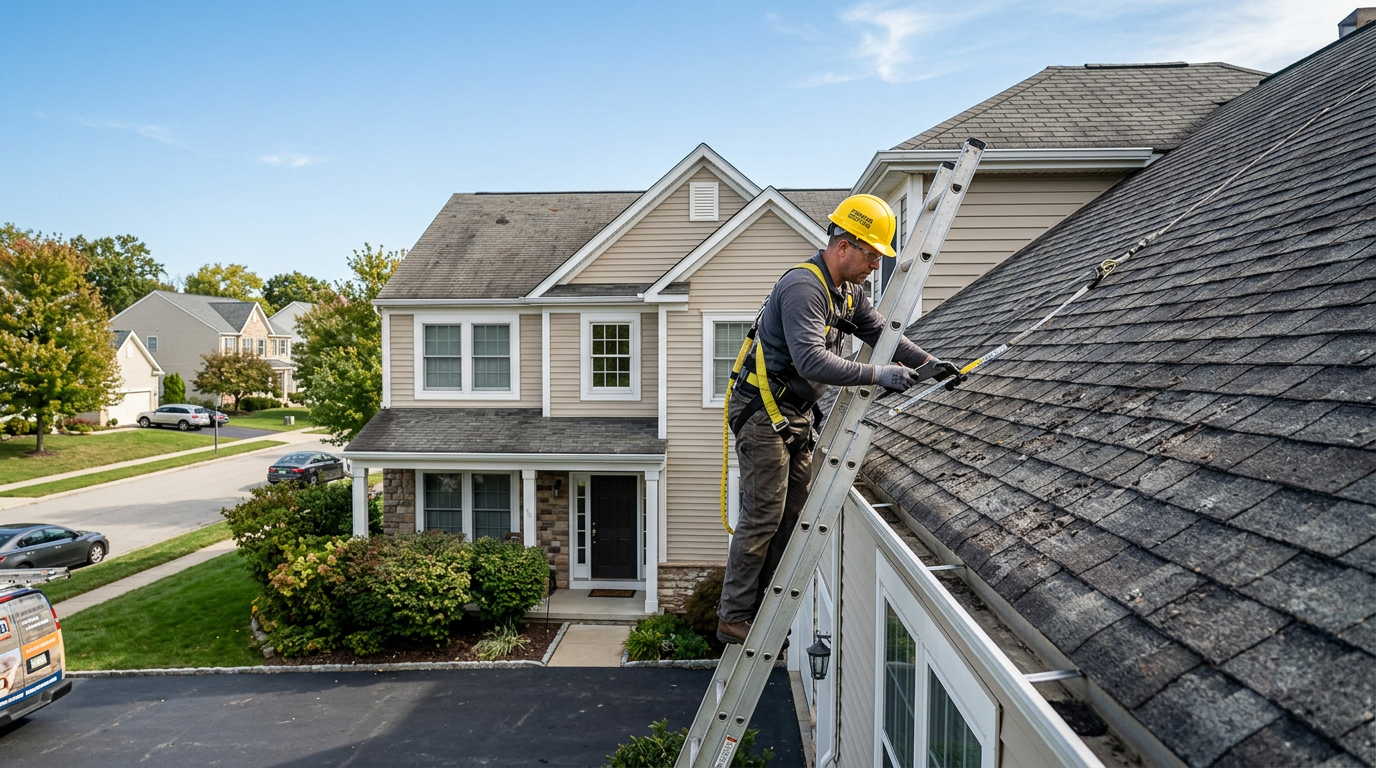
7 Signs You Need a New Roof
- Asphalt shingle roofs typically last 20–25 years — if yours is approaching that age, schedule an inspection even if it looks fine
- Curling shingles, granule loss in gutters, and daylight visible through roof boards are the three most reliable warning signs
- A sagging roofline indicates structural damage and requires immediate professional assessment
- A professional roof inspection costs $150–$400 and can catch problems before they become emergencies
- Waiting too long to replace a failing roof can lead to water damage, mold, and structural repair costs that far exceed the cost of a new roof
How to Tell If Your Roof Needs Replacing
Your roof protects everything beneath it — your home’s structure, insulation, wiring, and everything you own. But most homeowners don’t think about their roof until there’s a visible leak or a storm forces the issue. By then, the damage is often well beyond the roofing material itself.
Knowing the warning signs early lets you plan and budget for a replacement on your terms, rather than scrambling after an emergency. Here are the seven signs roofing professionals look for during an inspection.
1. Your Roof Is Over 20 Years Old
Asphalt shingle roofs — the most common residential roofing material in the U.S. — typically last 20–25 years with proper ventilation and maintenance. Architectural (dimensional) shingles may last 25–30 years, while basic 3-tab shingles tend to be on the shorter end.
If your roof is approaching that age range, start planning for a replacement — even if it looks fine from the ground. Roofing materials degrade gradually, and many problems aren’t visible from street level until they’re severe.
How to check your roof’s age: Look at your home inspection report from when you purchased the property, check with your local building department for permit records, or ask a roofing contractor to estimate the age based on the shingle type and condition.
2. Shingles Are Curling or Buckling
Curling and buckling are two of the most common signs of shingle failure. They happen for different reasons, but both mean the same thing: your shingles can no longer effectively shed water.
- Curling occurs when the edges of shingles turn upward or the middle cups downward. This is typically caused by moisture getting underneath, poor attic ventilation, or the shingles simply reaching the end of their lifespan.
- Buckling appears as wave-like distortions running vertically up the roof slope. It’s often caused by moisture in the roof deck or improperly installed underlayment.
A few curling shingles in one area might be a localized repair. But if curling or buckling is widespread across multiple sections, replacement is usually more cost-effective than patching.
3. Missing Shingles
Missing shingles leave the underlayment — and potentially the roof deck — exposed to UV radiation and moisture. You’ll often notice missing shingles after storms with high winds, but they can also fall away as the adhesive strips on older shingles dry out and fail.
A few isolated missing shingles can be patched if the rest of the roof is in good condition and replacement shingles can be color-matched. But widespread loss signals systemic adhesive failure, and spot repairs won’t solve the underlying problem.
4. Granule Loss in Gutters
Asphalt shingles are coated with ceramic granules that protect the underlying asphalt from UV degradation. Over time, these granules wear off — and when they do, the shingles deteriorate rapidly.
How to check: Look in your gutters and at the bottom of your downspouts after a rainstorm. Some granule loss is normal on new roofs (excess from manufacturing), but heavy accumulation of gritty, sand-like material in established gutters means your shingles are losing their protective layer.
You can also check the shingles themselves. If you see dark, exposed patches where granules have worn away, those shingles have limited remaining life.
5. Daylight Through the Roof Boards
This is one of the most definitive tests and requires only a trip to your attic on a sunny day. Turn off all lights and look up at the underside of the roof deck. If you can see pinpoints of daylight coming through, water can absolutely get through too.
While you’re up there, check for:
- Water stains on the underside of the decking or along rafters
- Damp or compressed insulation, which indicates ongoing moisture intrusion
- Mold or mildew smell, which suggests moisture has been present for some time
Any of these findings paired with visible daylight means you need a professional inspection, not just a patch.
6. Sagging Roof Deck
A sagging roofline is one of the most serious warning signs. Unlike cosmetic shingle issues, a sag indicates structural problems — typically prolonged moisture damage to the plywood decking or even the rafters and trusses beneath.
Stand at the curb and look at your roofline. It should appear straight and level. Any noticeable dips, bowing, or waviness suggests the structure underneath has been compromised.
7. Rising Energy Bills
A failing roof does more than let water in — it also lets conditioned air out. If your heating or cooling bills have increased without a clear explanation (no rate hike, no change in usage patterns), poor roof performance could be the culprit.
Deteriorating roofing materials and damaged underlayment reduce your attic’s insulating capacity. In summer, more heat radiates into the attic and the living space below. In winter, warm air escapes through gaps and degraded insulation.
This sign is rarely conclusive on its own — many factors affect energy bills. But if you’re seeing rising costs alongside any of the other signs listed above, it strengthens the case for a roof inspection.
Repair vs. Full Replacement
Not every roofing issue requires a full tear-off. Here’s a general framework:
| Situation | Likely Action | Typical Cost |
|---|---|---|
| A few missing or damaged shingles | Spot repair | $200 – $600 |
| Localized damage in one area | Partial repair | $500 – $1,500 |
| Widespread curling, granule loss, or age > 20 years | Full replacement | $8,000 – $25,000+ |
| Sagging deck or structural damage | Replacement + structural repair | $15,000 – $40,000+ |
A roofing contractor can assess whether repairs will meaningfully extend your roof’s life or just delay the inevitable. As a rule of thumb, if repairs would cost more than 30% of a full replacement, most contractors recommend replacing the entire roof.
What to Do Next
If you’ve spotted one or more of these signs, don’t wait for a leak. A professional roof inspection costs $150–$400 and can save you thousands by catching problems before they cause interior water damage, mold, or structural issues.
When hiring a roofing contractor for an inspection or replacement:
- Verify licensing and insurance — ask for their contractor license number and proof of general liability and workers’ compensation insurance.
- Get at least three quotes — pricing varies significantly between contractors, even in the same market.
- Ask about warranties — manufacturer warranties (covering materials) and workmanship warranties (covering installation) are separate. Get both in writing.
- Check references and reviews — ask for recent local references and verify them.
Enter your zip code below to get free quotes from licensed roofing contractors in your area.
Deep Dive: More on Roofing
How to Choose a Roofing Contractor: 7 Things to Check Before You Hire
Step-by-step guide: how to choose a roofing contractor. Everything homeowners need to know.
How Much Does a Roof Replacement Cost in 2026?
Get real cost data for how much does a roof replacement cost. Prices, breakdowns, and what to budget.