
Bathroom Remodel ROI: Which Upgrades Actually Increase Home Value?
- Midrange bathroom remodels return 72–74 cents on every dollar spent nationally
- Upscale remodels return only 43–56%, meaning luxury upgrades rarely pay back
- Pacific and New England regions post the highest ROI, often exceeding 90%
- Cosmetic refreshes ($1.71 return per $1 spent) outperform full gut renovations in resale value
- Walk-in showers, updated vanities, and improved ventilation deliver the strongest per-dollar returns
- Steam showers, heated floors, and smart toilets rarely recoup their cost at resale
Bathroom remodels rank among the most popular home improvement projects in the country — and among the most frequently misunderstood when it comes to resale value. Homeowners spend anywhere from $8,000 to over $75,000 on a bathroom renovation, yet the actual return at closing depends heavily on project scope, local market conditions, and which specific upgrades they chose.
This guide cuts through the marketing and delivers the numbers: what bathroom remodels actually return, which upgrades move the needle on home value, and where homeowners consistently leave money on the table.
All ROI figures below are drawn from the Remodeling Magazine Cost vs. Value Report, the most comprehensive annual data set on home improvement returns in the U.S., supplemented with regional sales data and appraiser surveys.
National Average ROI: Midrange vs. Upscale
The single most important variable in bathroom remodel ROI is project tier. Midrange projects and upscale projects are not on the same curve — they operate in entirely different return brackets.
| Project Type | Average Cost | Resale Value Added | ROI |
|---|---|---|---|
| Midrange bathroom remodel | $24,600 | $18,200 | 74.0% |
| Upscale bathroom remodel | $76,900 | $32,900 | 43.8% |
| Midrange bathroom addition | $49,200 | $29,800 | 60.6% |
| Upscale bathroom addition | $103,700 | $44,900 | 43.3% |
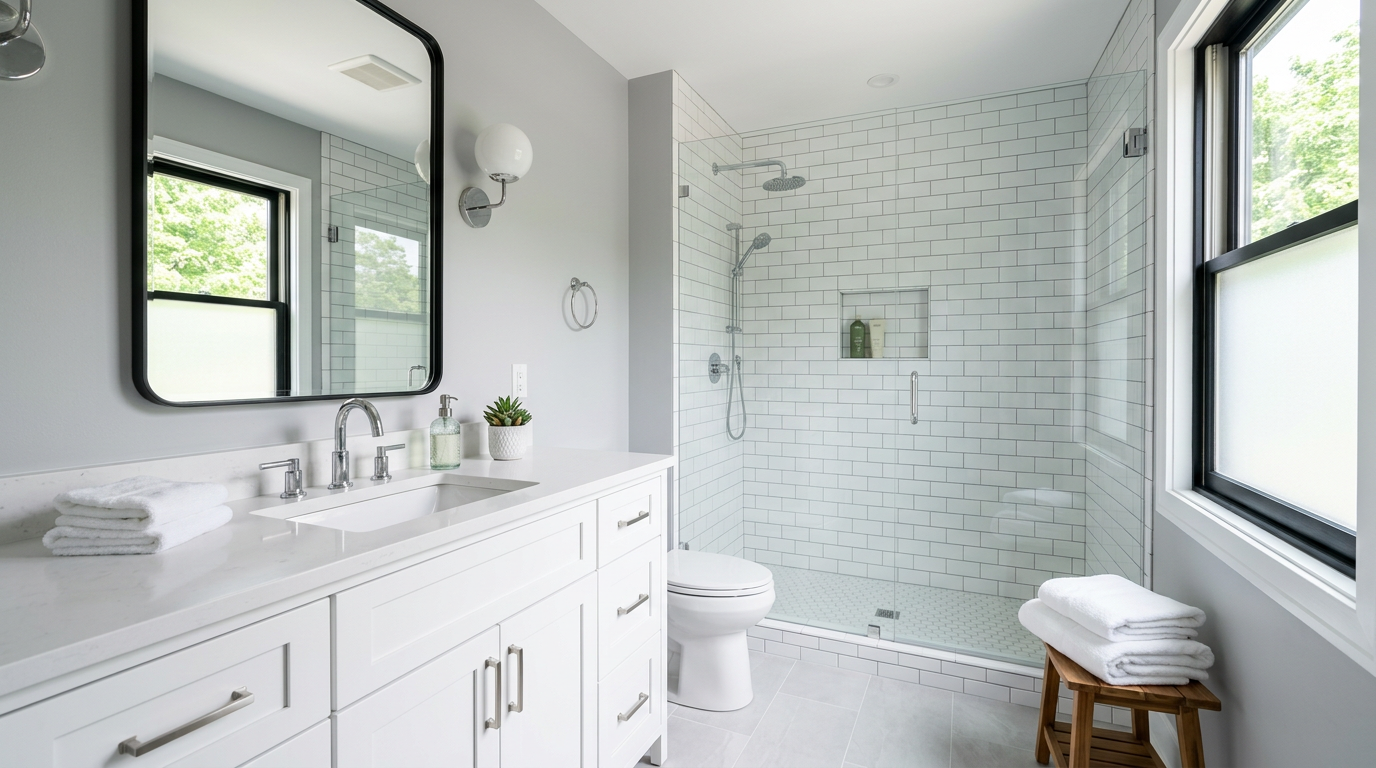
A midrange remodel at $24,600 typically covers: new tub/shower surround, toilet replacement, single vanity and mirror, updated lighting, exhaust fan, mid-grade flooring, and a fresh paint job. This scope hits the sweet spot between genuine condition improvement and cost discipline.
An upscale remodel at $76,900 usually adds: expanded square footage, custom tile work, frameless glass enclosures, dual vanities with premium fixtures, heated floors, and high-end finishes throughout. These additions are meaningful to buyers who specifically want them — but the pool of buyers willing to pay for them is narrower than sellers expect.
The math is unambiguous: doubling your budget does not double your return.
ROI by Region
Location matters as much as scope. Bathrooms in hot coastal markets return substantially more than identical projects in slower Southern or Midwestern markets, primarily because baseline home values are higher and buyers in those markets expect updated finishes.
| Region | Midrange Bathroom ROI | Upscale Bathroom ROI |
|---|---|---|
| Pacific (CA, OR, WA, AK, HI) | 91.4% | 63.2% |
| New England (MA, CT, RI, VT, NH, ME) | 90.5% | 58.1% |
| Mid-Atlantic (NY, NJ, PA, MD, DC) | 79.3% | 51.4% |
| East North Central (IL, OH, MI, WI, IN) | 68.7% | 40.9% |
| West South Central (TX, OK, AR, LA) | 62.1% | 38.4% |
| East South Central (AL, MS, KY, TN) | 60.3% | 36.7% |
| Mountain (CO, AZ, UT, NV, NM, ID, MT, WY) | 74.8% | 48.2% |
Pacific and New England markets routinely approach or exceed 90% ROI on midrange projects. In the East South Central region, the same project returns roughly 60 cents on the dollar. If you are in a slower market, the math for an upscale remodel rarely works in your favor.
ROI by Remodel Type
Beyond the midrange/upscale split, how you approach the project changes returns significantly.
| Remodel Approach | Typical Cost Range | Return per $1 Spent |
|---|---|---|
| Cosmetic refresh (paint, fixtures, hardware, lighting) | $1,500–$5,000 | $1.71 |
| Functional midrange (new fixtures, tile, vanity, fan) | $12,000–$28,000 | $0.74 |
| Full gut renovation, midrange finishes | $25,000–$45,000 | $0.68 |
| Full gut renovation, upscale finishes | $50,000–$85,000 | $0.44 |
| Bathroom addition (new full bath) | $40,000–$110,000 | $0.55–$0.61 |
The cosmetic refresh number ($1.71 per dollar spent) stands out because it reflects a basic economic reality: buyers and appraisers respond to fresh, clean, and functional. A bathroom with dated brass fixtures, scuffed walls, and a slow exhaust fan depresses perceived value well beyond its actual repair cost. Fixing those items cheaply removes a disproportionate discount from the home’s market price.
Full gut renovations invert this dynamic. You are paying for the disruption, the structural work, the contractor overhead, and premium materials — costs that appraisers and buyers do not dollar-for-dollar reward at resale.
Which Upgrades Add the Most Value
Not all bathroom upgrades are created equal from a resale standpoint. Appraisers and buyer surveys consistently rank the following improvements as high-value additions:
- Walk-in shower (especially replacing an unused tub in a non-primary bath)
- Modern vanity with under-mount sink and soft-close drawers
- Updated exhaust fan (code-compliant CFM rating, humidity sensing)
- Porcelain or ceramic tile flooring in neutral tones
- LED vanity lighting with proper color temperature (2700–3000K)
- Low-flow, comfort-height toilet replacement
- Frameless or semi-frameless shower enclosure (vs. sliding doors)
- Neutral paint in a light, consistent color palette
- Updated hardware (towel bars, robe hooks, toilet paper holder) in a consistent finish
- Recessed medicine cabinet with built-in storage
Walk-In Shower
Replacing a tub/shower combo with a properly sized walk-in shower is one of the highest-returning single upgrades in a primary or secondary bathroom, particularly for homes targeting buyers aged 45 and older. The caveat: retain at least one tub in the home (typically a hall bath or guest bath). Homes with zero tubs face buyer resistance in family-oriented markets.
See our full breakdown: Walk-In Shower vs. Tub: Which Is Better for Resale?
Vanity and Storage
A double vanity in the primary bath is among the most requested features in buyer surveys. A quality 48–60” vanity with a quartz or solid-surface top, under-mount sink, and soft-close cabinetry runs $800–$2,500 installed and returns well above its cost in perceived value. The functional argument (storage, dual-use) resonates with buyers who don’t need to be convinced of its value.
Lighting and Ventilation
These two upgrades are persistently underrated. Inadequate lighting makes any bathroom feel smaller and older. Inadequate ventilation — the leading cause of mold and mildew in bathrooms — is a red flag for inspectors and buyers alike. A proper exhaust fan upgrade ($150–$400 installed) eliminates a condition issue that would otherwise require disclosure or price negotiation.
Which Upgrades Don’t Add Proportional Value
The following upgrades are consistently desired by homeowners but consistently fail to recoup their cost at resale. They are lifestyle purchases — valuable if you plan to stay, poor investments if you are remodeling primarily for resale.
| Upgrade | Installed Cost | Estimated Resale Return | Notes |
|---|---|---|---|
| Steam shower system | $3,500–$8,000 | 20–35% | Perceived as a maintenance liability by many buyers |
| In-floor radiant heat | $5,000–$15,000 | 25–40% | High cost, narrow buyer appeal in most markets |
| Smart toilet (bidet seat + auto flush) | $1,200–$4,500 | 10–25% | Buyers rarely pay premium; may actually create friction |
| Whirlpool/jetted tub | $2,500–$6,000 | 30–45% | Cleaning concerns, dated aesthetic perception post-2010 |
| Custom mosaic tile work | $3,000–$12,000 | 30–50% | Highly personal; can reduce appeal with buyers who dislike it |
| Designer plumbing fixtures (European brands) | $2,000–$8,000 premium | 15–30% of premium | Buyers can’t identify brand; won’t pay brand premium |
How to Maximize Bathroom Remodel ROI
The principles for maximizing return are simple, though they often conflict with what homeowners want to do:
1. Keep the project midrange. The data does not support upgrading to luxury finishes in most markets. Mid-grade tile, mid-grade vanities, and mid-grade fixtures return as well or better than premium alternatives in the majority of U.S. markets.
2. Match your neighborhood. Appraisers use comparable sales to set value. If the homes selling for $350,000 in your area have updated but not luxury bathrooms, your luxury remodel will not push your sale price above that ceiling.
3. Prioritize function over aesthetics. Buyers tolerate dated aesthetics more easily than functional deficiencies. Fix the ventilation, the leaking faucet, the failing grout, the inadequate lighting — before spending money on premium tile.
4. Address square footage last. Expanding the bathroom footprint is expensive ($20,000–$50,000 for moving walls and plumbing) and returns less per dollar than a well-executed renovation of existing space. See how much a bathroom remodel costs before budgeting for expansion.
5. Neutral wins. Bold tile choices, dramatic color palettes, and statement fixtures appeal to a narrower buyer pool. Neutral finishes in whites, light grays, and warm beiges consistently outperform in appraisals and buyer surveys.
Bathroom ROI vs. Other Home Improvements
How does a bathroom remodel stack up against other common renovation projects?
| Project | National Average ROI | Cost Range |
|---|---|---|
| Garage door replacement | 97.0% | $4,500–$8,000 |
| Manufactured stone veneer | 95.0% | $11,000–$18,000 |
| Entry door replacement (steel) | 88.0% | $2,500–$5,000 |
| Midrange kitchen remodel | 80.5% | $28,000–$45,000 |
| Midrange bathroom remodel | 74.0% | $20,000–$30,000 |
| Deck addition (wood) | 68.2% | $17,000–$25,000 |
| Upscale kitchen remodel | 53.5% | $80,000–$150,000 |
| Upscale bathroom remodel | 43.8% | $65,000–$95,000 |
| Home office addition | 54.5% | $40,000–$70,000 |
Bathroom remodels outperform kitchen remodels of equivalent scale on a percentage-return basis, and they require significantly less disruption and construction time. However, they are outperformed by exterior improvements — garage doors, entry doors, and stone veneer — which carry lower costs and near-universal appeal.
If your sole objective is maximum ROI per dollar spent, exterior curb appeal improvements come first, followed by midrange kitchen updates, followed by midrange bathroom remodels.
When NOT to Remodel for ROI
There are scenarios where a bathroom remodel makes no financial sense as a pre-sale investment:
Selling within 24 months. A remodel completed less than two years before listing often fails to recoup its full cost at sale. Markets shift, staging matters, and buyers discount even recent renovations if they perceive them as seller-motivated. The exception: cosmetic refreshes, which have short payback windows due to their low upfront cost.
Over-improving for the neighborhood. If your home is already at the top of the price range for your street, a bathroom upgrade will not move the needle. The neighborhood caps your value regardless of finish quality.
Structural or system issues elsewhere. A beautiful bathroom will not offset a failing HVAC system, outdated electrical panel, or leaking roof in buyer or appraiser perception. Address deferred maintenance first.
Highly personalized existing bathroom. If a previous owner installed bold custom tile or dramatic finishes that you don’t love, buyers probably won’t either. A neutral cosmetic refresh often outperforms a full renovation in these situations. See our guide on small bathroom remodel costs for budget-sensitive options.
Bottom Line
Bathroom remodels deliver real, measurable value at resale — but only when scoped and executed with discipline. The national average of 72–74% ROI for midrange projects is a genuine return, not a marketing claim. It means that a well-planned $25,000 remodel adds approximately $18,000–$19,000 in appraised value and buyer willingness-to-pay.
The variables that erode that return are predictable: project creep into upscale finishes, upgrades that buyers won’t reward (steam showers, heated floors, smart toilets), and over-improving relative to the neighborhood price ceiling.
The formula for maximum ROI is consistent: keep the scope midrange, prioritize function and neutrality over luxury and personalization, and match the finish level to what comparable homes in your market actually sell for.
If you are planning a bathroom remodel and want to understand the realistic return in your specific market, get quotes from licensed local contractors who can assess your existing space and recommend a scope that targets genuine resale value — not just a beautiful bathroom.
Deep Dive: More on Bathroom Remodel
10 Bathroom Tile Trends for 2026: What's In and What's Out
The top bathroom tile trends for 2026 — from zellige to tile drenching. See what's trending, what it costs, and which styles have staying power.
How to Choose a Bathroom Vanity: Sizes, Styles, and What to Look For
A complete guide to choosing the right bathroom vanity. Covers sizes, materials, countertops, sinks, and costs for every budget.
How Long Does a Bathroom Remodel Take? A Timeline Guide
A bathroom remodel takes 2-8 weeks depending on scope. See phase-by-phase timelines, common delays, and how to keep your project on track.
Best Tile for Bathroom Floors: A Complete Comparison Guide
Choosing bathroom floor tile? Compare porcelain, ceramic, natural stone, and vinyl by cost, durability, water resistance, and maintenance.