
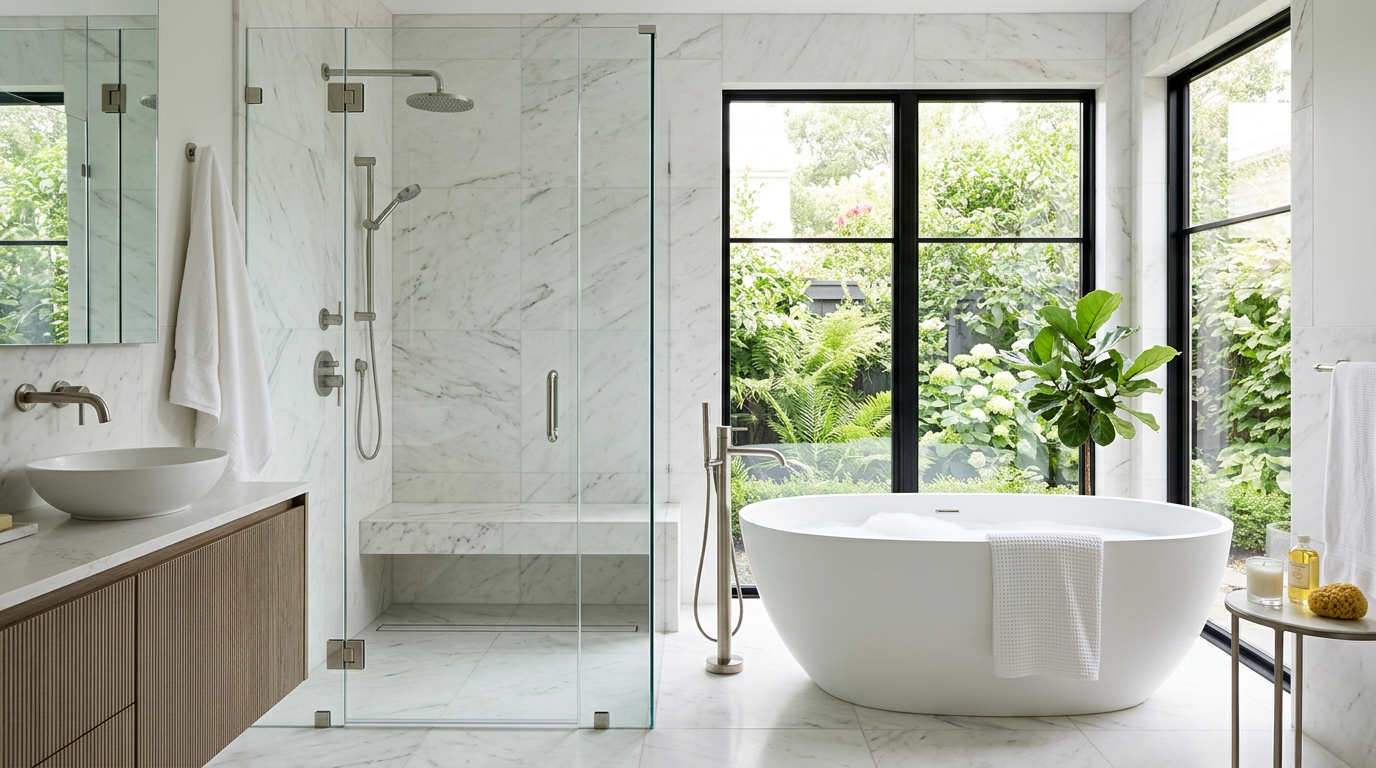
Walk-In Shower vs. Bathtub: Which Is Right for You?
- Walk-in showers cost $2,500–$15,000+ installed; bathtubs run $1,500–$12,000+ depending on style and materials
- Real estate agents recommend keeping at least one bathtub in the home — removing all tubs can narrow your buyer pool
- Walk-in showers with zero-threshold entry are the best choice for aging-in-place and accessibility renovations
- A standard 10-minute shower uses about 25 gallons; a full bath uses 35–50 gallons
- If you have a two-bathroom home, consider a walk-in shower in the primary bath and a tub in the secondary
Walk-In Shower vs. Bathtub: A Complete Comparison
Choosing between a walk-in shower and a bathtub is one of the biggest decisions in a bathroom remodel. Both have clear advantages depending on your household, budget, and lifestyle — and getting this decision wrong can affect both your daily routine and your home’s resale value.
This guide breaks down the real differences so you can choose with confidence.
Cost Comparison
Installation costs depend heavily on materials, complexity, and your local labor market. Here’s what homeowners are typically paying:
| Feature | Walk-In Shower | Bathtub |
|---|---|---|
| Basic install | $2,500 – $5,000 | $1,500 – $3,000 |
| Mid-range | $5,000 – $10,000 | $3,000 – $7,000 |
| High-end | $10,000 – $15,000+ | $7,000 – $12,000+ |
Walk-in showers cost more primarily because of waterproofing requirements. A shower enclosure needs a fully waterproofed pan and walls — often with a membrane system like Kerdi or RedGard — plus a glass enclosure or panel. A bathtub installation is simpler because the tub itself is the waterproof vessel.
For a more detailed cost breakdown across your full remodel, see our bathroom remodel cost guide.
Resale Value and Buyer Expectations
Real estate agents generally recommend keeping at least one bathtub in the home, especially for families with young children. Homes with zero bathtubs can see reduced buyer interest — some agents estimate a 5–10% narrowing of the potential buyer pool.
However, a well-designed walk-in shower in the primary bathroom is increasingly expected by buyers. The National Association of Realtors consistently reports that updated primary bathrooms are among the top features buyers look for.
The smart approach for most homes:
- Two or more bathrooms: Install a walk-in shower in the primary and keep a tub in the secondary or hall bath.
- One-bathroom home: A tub-shower combo preserves flexibility for both resale and daily use.
- Luxury primary bath: A large walk-in shower paired with a freestanding soaking tub offers the best of both worlds, though this requires more square footage and budget.
Accessibility and Aging in Place
Walk-in showers with zero-threshold (curbless) entry are the clear winner for accessibility. They accommodate wheelchairs and walkers, allow grab bars to be installed at multiple heights, and eliminate the step-over hazard that causes thousands of bathroom falls each year.
If you’re planning to age in your home — or renovating for an older family member — a curbless shower with a built-in bench and handheld showerhead is one of the highest-impact safety upgrades you can make.
Maintenance and Cleaning
Day-to-day cleaning requirements differ noticeably:
Walk-in showers with large-format tile or solid-surface panels have fewer grout lines and are generally easier to wipe down. Frameless glass enclosures look striking but require regular squeegee use to prevent water spots and soap scum buildup.
Bathtubs require scrubbing around the drain, overflow, and along the bottom surface where soap residue collects. Freestanding tubs also need cleaning around and behind the exterior — areas that are harder to reach.
For either option, choosing the right tile makes a real difference in long-term maintenance. Porcelain and ceramic are easier to maintain than natural stone, which requires periodic sealing.
Water Usage
If water conservation or utility costs matter to your household, showers have a clear advantage:
- A standard 10-minute shower uses about 25 gallons (less with a low-flow showerhead at 2.0 GPM or lower).
- A full bath uses 35–50 gallons depending on tub size.
Over a year, a household that switches from daily baths to daily showers can save 3,500–9,000 gallons of water. In areas with high water and sewer rates, that translates to meaningful savings on utility bills.
Space Requirements
Walk-in showers and bathtubs have different footprints, which matters in small bathroom remodels:
- Minimum shower size: 36×36 inches (code minimum in most jurisdictions), though 48×36 or larger is far more comfortable.
- Standard bathtub: 60×30 inches for an alcove tub — takes up more linear wall space.
- Freestanding tub: Requires clearance on all sides, typically needing a bathroom at least 8×10 feet.
In tight bathrooms under 40 square feet, a walk-in shower almost always makes better use of the available space.
Our Recommendation
There’s no single right answer — it depends on your household. Here’s the decision framework:
- Choose a walk-in shower if it’s your primary bathroom and you value accessibility, easy cleaning, and a modern look. Especially smart if you have a second bathroom with a tub.
- Keep the bathtub in at least one bathroom for resale value and if you have young children who need baths.
- Consider a tub-shower combo in single-bathroom homes to preserve flexibility without committing to one option.
The best approach is to discuss your specific layout and goals with a contractor who can assess your plumbing, floor space, and budget before you commit to either direction.
Ready to Remodel?
Whether you choose a shower or tub, a licensed contractor can help you plan the layout, select materials, and stay within budget. Getting multiple quotes is the best way to compare pricing and find the right fit for your project.
Deep Dive: More on Bathroom Remodel
10 Bathroom Tile Trends for 2026: What's In and What's Out
The top bathroom tile trends for 2026 — from zellige to tile drenching. See what's trending, what it costs, and which styles have staying power.
How to Choose a Bathroom Vanity: Sizes, Styles, and What to Look For
A complete guide to choosing the right bathroom vanity. Covers sizes, materials, countertops, sinks, and costs for every budget.
How Long Does a Bathroom Remodel Take? A Timeline Guide
A bathroom remodel takes 2-8 weeks depending on scope. See phase-by-phase timelines, common delays, and how to keep your project on track.
Best Tile for Bathroom Floors: A Complete Comparison Guide
Choosing bathroom floor tile? Compare porcelain, ceramic, natural stone, and vinyl by cost, durability, water resistance, and maintenance.