
How to Hire a Bathroom Remodeling Contractor: A Homeowner's Guide
- Get at least three written, itemized bids — and compare them line by line, not just by final price.
- Verify your contractor's license directly with your state licensing board before signing anything.
- Require current certificates of general liability insurance and workers' compensation coverage, naming you as additionally insured.
- A fair payment schedule never exceeds 10–30% upfront; tie remaining draws to specific completed milestones.
- Get every scope change in writing before work proceeds — verbal approvals are how remodels go over budget.
You’ve already decided to hire a professional. Now comes the part most homeowners underestimate: picking the right one. Choosing a bathroom remodeling contractor isn’t just about getting the lowest price — it’s about protecting your home, your budget, and your sanity from the moment the demo starts to the day you turn on that new shower. This guide walks you through every step of the process so you hire with confidence.
Why Hiring the Right Contractor Matters
A bathroom remodel is one of the most disruptive, technically demanding projects you can do to a home. You’re dealing with water supply lines, drain stacks, electrical circuits (often GFCI requirements near water), ventilation, tile work, and finished carpentry — frequently all in a space under 100 square feet. When even one of those trades is done wrong, the problems compound fast: a poorly sloped shower floor leads to standing water and mold; undersized wiring creates a fire hazard; improper flashing around a tub surround quietly destroys your subfloor for years.
Beyond workmanship, the wrong contractor exposes you to serious financial and legal risk. Unlicensed workers who get injured on your property can sue you if the contractor carries no workers’ compensation insurance. Work done without required permits can force you to tear it out, delay a home sale, or void your homeowner’s insurance claim. And a contractor who walks off mid-job — or worse, pockets your deposit and disappears — can leave you with a gutted bathroom and no legal recourse if you didn’t vet them first.
The average full bathroom remodel runs $10,000–$25,000, and a master bath renovation can reach $30,000 or more. At those numbers, a few hours of due diligence upfront is the best return on investment you can make. See our detailed breakdown of how much a bathroom remodel costs to set your budget before you start calling contractors.
Where to Find Bathroom Remodeling Contractors
Start with referrals from people you trust. Ask neighbors who’ve had recent remodels, friends, or family — and ask specifically whether they’d hire the contractor again. A second-hand “they did fine” is different from an enthusiastic “I’d call them tomorrow.”
Beyond personal referrals, several channels are worth using together:
- Online lead-matching platforms: match you with pre-screened local contractors and let you compare bids efficiently. Quality varies by platform and market, so still vet every contractor individually.
- Local tile and plumbing showrooms: staff there know which contractors actually do quality work because they see the callbacks and complaints. Ask who their best customers recommend.
- Building material supply houses: contractors who have established accounts at the local supply house are typically running real businesses, not side-gig operations.
- Your state’s licensing board website: most states publish a searchable directory of licensed contractors by trade and city. Starting here means you’re only calling contractors who at least cleared the licensing bar.
- Neighborhood apps and local Facebook groups: useful for finding names, but read the actual comments rather than just counting recommendations.
How to Vet a Contractor Before You Hire
Once you have three to five candidates, verify each one before you agree to an in-home estimate.
License verification. Contractor licensing requirements vary by state — some require a general contractor license for any remodel over a dollar threshold; others regulate specifically by trade (plumbing, electrical). Visit your state contractor licensing board’s website and search the contractor’s name and license number. Confirm the license is active, not expired, and that any required bond is current. If a contractor is unlicensed in a state that requires it, stop there.
Insurance check. Ask for a certificate of insurance (COI) showing two policies: general liability (covering property damage) and workers’ compensation (covering injuries to workers on your property). The COI should be current and list your name and address as the certificate holder. Don’t just accept a verbal assurance — call the insurance carrier’s number on the certificate to confirm the policy is active. Any legitimate contractor will expect this request.
Portfolio review. Ask to see photos of completed bathroom projects similar in scope to yours. Better yet, ask if any past clients would allow a walkthrough of their finished bathroom. Seeing actual tile work, grout lines, and fixture installation in person tells you far more than a website gallery.
Reference calls. Ask for three references from bathroom projects completed in the past 18 months. When you call, ask: Did the project finish on time? Did the final cost match the estimate? How were problems handled when they came up? Would you hire them again? Contractors who’ve delivered for clients will give references freely. Those who hesitate or offer references from years ago should raise your suspicion.
Questions to Ask Before Signing a Contract
When you meet with a contractor for a bid, this is your interview of them — not the other way around. Ask these questions directly and pay attention to whether the answers are clear and confident or vague and evasive.
-
“Are you licensed for this type of work in our state, and can I see your license number?” — Gives you what you need for verification; a good contractor will have it ready.
-
“Who pulls the permits?” — The contractor should pull all required permits in their name. A contractor who asks you to pull permits as the homeowner is trying to dodge accountability.
-
“Who will actually be doing the work — your own employees or subcontractors?” — Either can be fine, but you should know. If subs are used, ask whether those subs carry their own insurance.
-
“What is the project timeline, and what are the key milestones?” — Forces them to think through the schedule and gives you a baseline for tracking progress.
-
“How do you handle change orders?” — The answer should be: in writing, before the work happens, with a signed approval from you. Anything less is a setup for disputes.
-
“What does your payment schedule look like?” — Listen for milestone-based draws. Be wary of anyone asking for more than 30% upfront.
-
“What warranty do you offer on your labor?” — One year is common for workmanship; some contractors offer more. Get it in writing.
-
“Have you done bathroom projects in homes of similar age to mine?” — Older homes often have surprises (cast iron drain lines, knob-and-tube wiring, asbestos tile backer). Experience matters.
-
“Who is my point of contact during the project, and how often will we communicate?” — You want to know who to call and when to expect updates.
-
“Can you provide a full itemized bid, not just a lump-sum price?” — This is non-negotiable for any serious comparison.
Understanding Contractor Bids and Estimates
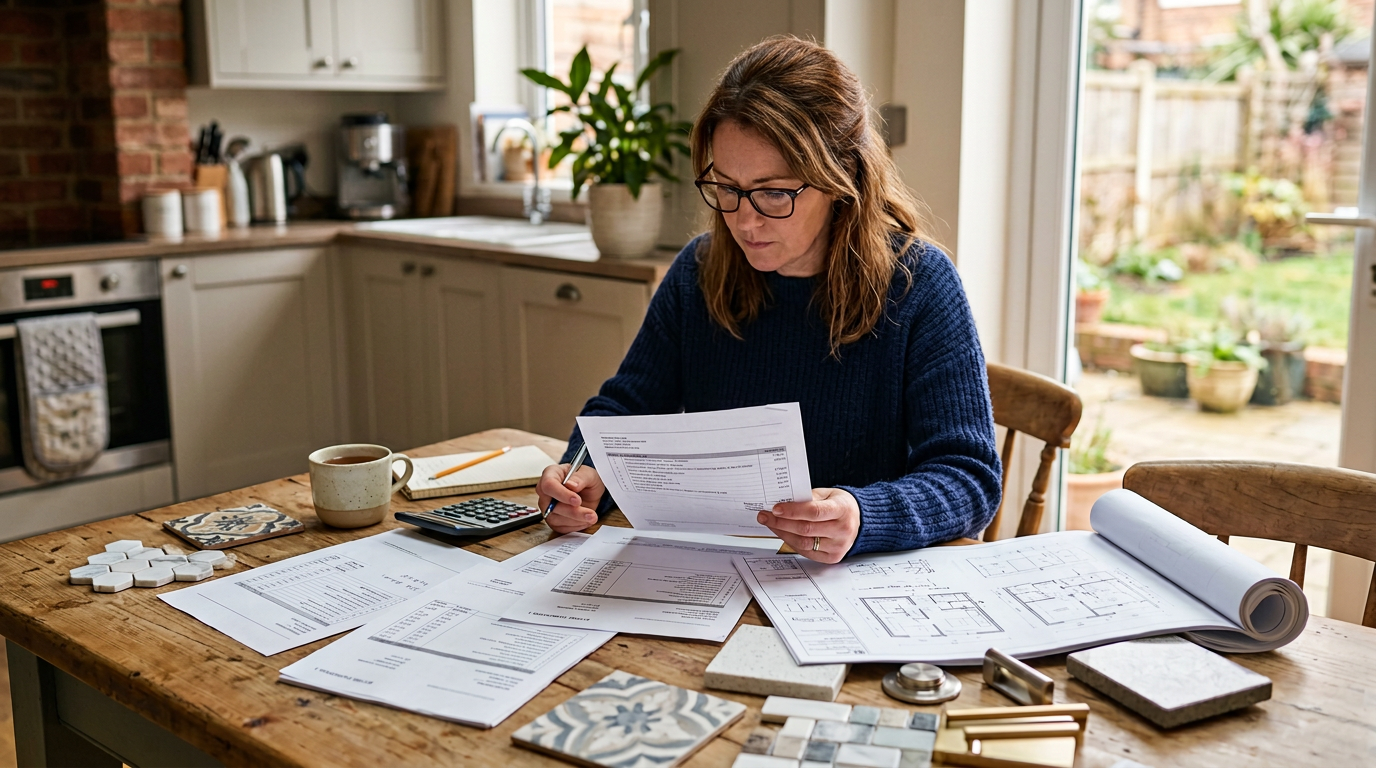
A bid is only useful if you can read it. When comparing quotes from multiple contractors, a single bottom-line number tells you almost nothing. Request fully itemized bids that break out labor and materials separately, and push back on any contractor who gives you only a lump sum.
What a detailed bid should include:
- Demolition and debris removal (labor + haul-away cost)
- Rough plumbing (moving or extending supply and drain lines)
- Rough electrical (new circuits, GFCI outlets, exhaust fan wiring)
- Tile work (labor rate and square footage) and materials (tile, grout, mortar, backer board)
- Fixture installation (toilet, vanity, tub/shower, faucets)
- Finish carpentry (vanity, mirror, shelving, trim)
- Permit fees (should be a separate line item — never buried)
- Contingency or allowance line for unknowns (common in older homes)
Comparing bids apples to apples. When one bid comes in 20% lower than the others, dig into why before celebrating. Common reasons for low bids: thinner materials specified, substandard tile included in the allowance, labor from less experienced workers, or simply an incomplete scope that will generate change orders later. Ask each contractor to confirm exactly which materials are included. A bid with a $200 tile allowance and a bid with a $600 tile allowance are not the same bid.
The lowball warning. A significantly low bid isn’t always fraud — sometimes a contractor is hungry for work or made a genuine mistake. But if you accept a bid built on unrealistic numbers, you’ll face pressure for change orders the moment work begins. If a bid is more than 15–20% below the others, ask the contractor to walk you line by line through how they got there. Their answer will tell you a lot.
Review our bathroom remodel order of operations guide to understand the project phases so you can assess whether a contractor’s timeline and scope make sense.
Ready to Get Started?
Enter your zip code for free quotes from local pros.
Red Flags That Should Make You Walk Away
Most contractor horror stories share common warning signs that were visible before the project started. If you see any of these, don’t rationalize — move on.
No license when one is required. Licensing requirements exist for a reason. An unlicensed contractor can’t legally pull permits, has no accountability to a licensing board, and may have no formal training. In most states this is also a criminal offense.
No written contract or resistance to putting things in writing. Any contractor who says “we don’t need all that paperwork, just trust me” is telling you they don’t want to be held accountable. Walk away immediately.
Unusually large upfront deposit. Asking for 40%, 50%, or full payment upfront is a classic warning sign. Legitimate contractors have established credit with suppliers and don’t need your money to buy materials. Large upfront demands are how deposit scams work.
Asking you to pull the permits. If a contractor is licensed, they pull permits in their own name and stand behind the work during inspection. Asking the homeowner to pull permits shifts liability to you and often signals the contractor can’t pass inspection or isn’t licensed.
Pressure to decide today or lose a “special price.” High-pressure tactics and artificial urgency are manipulation. Reputable contractors are busy but not desperate. Any legitimate deal can survive 48 hours of consideration.
Only accepts cash. Cash-only demands eliminate your paper trail and make disputes nearly impossible. Pay by check or credit card for all major payments.
No physical business address. A contractor who operates only from a cell phone and a truck may not be running a legitimate business. Look for a verifiable company name, an address you can confirm, and an established web presence.
Vague answers about permits. If a contractor says “we usually don’t bother with permits for this kind of work” — that’s not a benefit to you; it’s a liability. Make sure you understand what permits are required for your bathroom remodel before any conversation about skipping them.
What to Include in Your Contract
Never allow work to begin without a signed written contract. This document is your only protection if disputes arise. A thorough contract should address all of the following:
Scope of work. A detailed description of exactly what will be done — not “remodel master bath” but a line-by-line description of every task, every material, and every finish. Attach the itemized bid as an exhibit.
Material specifications. Brand, model, color, and grade for every fixture and finish material included in the price. Vague “allowances” should be defined clearly, and any substitutions should require your written approval.
Project timeline. Start date, substantial completion date, and key milestone dates (demo complete, rough-in complete, tile complete). Include a clause addressing what happens if the contractor misses the schedule.
Payment schedule. Tied explicitly to project milestones, not to calendar dates. A common structure: 10–20% at contract signing, 25–30% at rough-in completion, 25–30% at tile and fixtures installed, final balance at substantial completion and your approval. Retain 5–10% until all punch list items are resolved.
Change order process. All changes to scope, materials, or price must be documented in a signed written change order before the work is performed. Both parties sign. No exceptions.
Permit responsibility. The contract should state explicitly that the contractor is responsible for obtaining all required permits and scheduling all required inspections.
Cleanup and site protection. Who is responsible for daily cleanup, dust containment, and protection of adjacent areas. Bathroom remodels generate significant debris and dust.
Dispute resolution. How disagreements will be handled — mediation, arbitration, or litigation, and in which jurisdiction.
Warranty terms. Written warranty on labor, minimum duration, and what the contractor will do if a defect appears. Manufacturer warranties on fixtures are separate — make sure you receive all documentation.
Lien waiver provisions. Language requiring the contractor to provide lien waivers from subcontractors and suppliers as draws are paid. Without this, a sub you’ve never met can file a mechanic’s lien against your home if the general contractor doesn’t pay them.
If you’re still weighing whether to go the DIY route versus hiring a professional, our comparison of DIY bathroom remodel vs. hiring a contractor covers the trade-offs in detail.
Frequently Asked Questions
Should I hire a general contractor or specialty subs directly for a bathroom remodel?
For a full bathroom remodel involving plumbing, electrical, and tile work, hiring a general contractor who coordinates the subs is usually worth the markup. Managing the sequencing between trades — and being the single point of accountability when something goes wrong — is what a GC earns their fee for. If your project is limited to a single trade, like retiling a shower with no layout changes, hiring a specialty contractor directly can save money.
How many quotes should I get for a bathroom remodel?
Get at least three written, itemized bids from licensed contractors. Three quotes give you enough data to identify the market rate for your project, spot an outlier (high or low), and make an informed decision. Going beyond five quotes typically produces diminishing returns and delays your start date.
What licenses should a bathroom remodeling contractor have?
Licensing requirements vary significantly by state and sometimes by municipality. Many states require a general contractor license for projects above a certain dollar threshold; others require separate licenses for plumbing and electrical work even if a GC is overseeing the project. Check your state’s contractor licensing board website for the specific requirements in your area. At minimum, confirm any contractor you hire is in good standing with whatever license your state requires for the scope of work.
How do I verify a contractor’s insurance?
Ask the contractor to provide a certificate of insurance (COI) directly from their insurance carrier. The COI should show active general liability and workers’ compensation coverage. Call the insurance company’s phone number listed on the certificate — not a number provided by the contractor — to confirm the policies are current. You can also ask to be listed as an additional insured on the general liability policy for the duration of the project.
What is a reasonable deposit for a bathroom remodel?
10–20% is standard. Up to 30% can be justified if the contractor needs to place large custom material orders (specialty tile, a custom vanity), but only when those items are clearly specified in the contract. The key principle: at no point during the project should you have paid more than the value of work completed plus materials on site. If a contractor asks for more than 30% before breaking ground, treat it as a red flag.
Get Started
Hiring a bathroom remodeling contractor well is a process, not a transaction. The homeowners who come out ahead are the ones who slow down before signing, ask the uncomfortable questions, and insist on everything in writing. The contractors who push back on that process are telling you something important.
When you’re ready to start collecting bids from licensed, insured contractors in your area, we can connect you with vetted pros who serve your zip code. Compare quotes on your terms — no pressure, no obligation.
Find Trusted Local Pros
Get free quotes from licensed, vetted contractors in your area.
Deep Dive: More on Bathroom Remodel
10 Bathroom Tile Trends for 2026: What's In and What's Out
The top bathroom tile trends for 2026 — from zellige to tile drenching. See what's trending, what it costs, and which styles have staying power.
How to Choose a Bathroom Vanity: Sizes, Styles, and What to Look For
A complete guide to choosing the right bathroom vanity. Covers sizes, materials, countertops, sinks, and costs for every budget.
How Long Does a Bathroom Remodel Take? A Timeline Guide
A bathroom remodel takes 2-8 weeks depending on scope. See phase-by-phase timelines, common delays, and how to keep your project on track.
Best Tile for Bathroom Floors: A Complete Comparison Guide
Choosing bathroom floor tile? Compare porcelain, ceramic, natural stone, and vinyl by cost, durability, water resistance, and maintenance.