
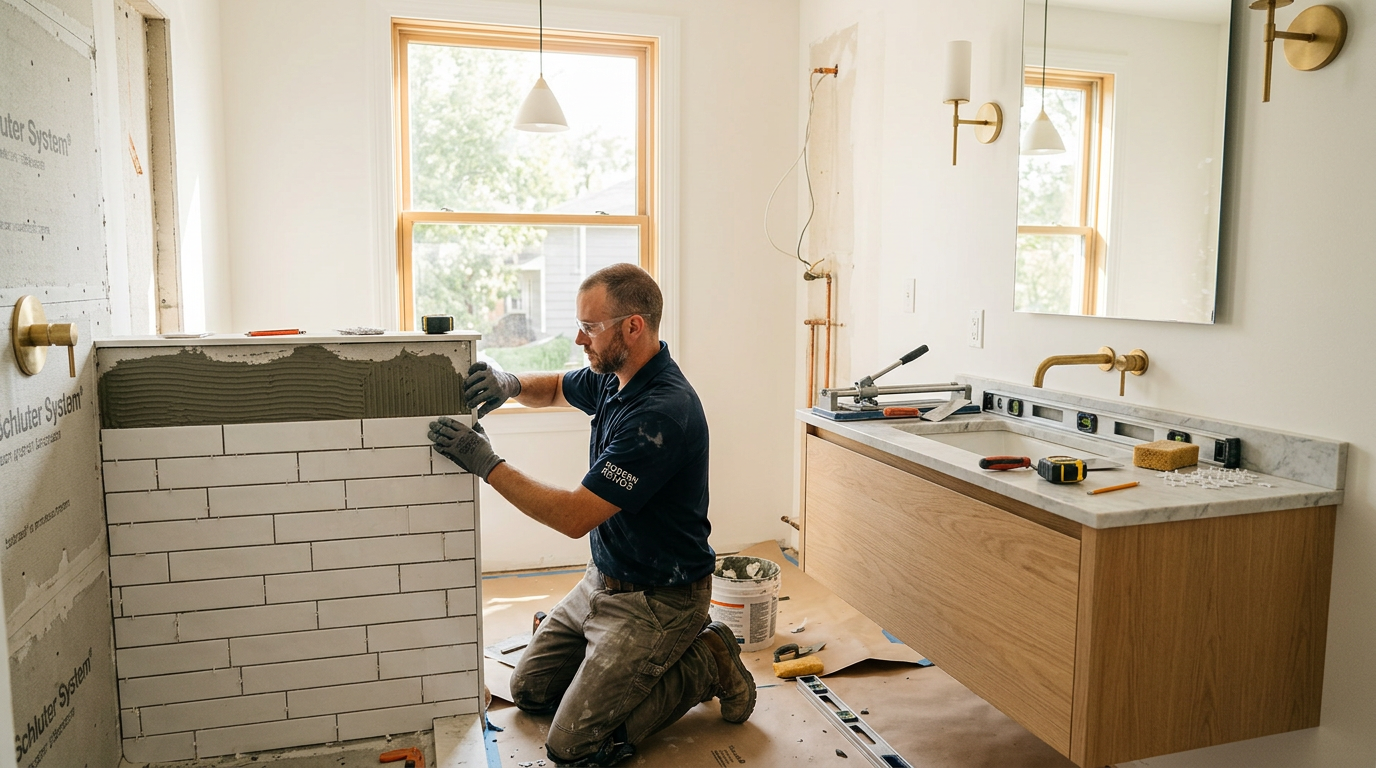
How Much Does a Bathroom Remodel Cost in 2026?
- A mid-range bathroom remodel costs $15,000–$25,000 nationally, but varies 30–50% by region
- Labor accounts for 40–60% of total cost — getting multiple quotes is the single best way to save
- Keeping your existing layout (no plumbing moves) can save $3,000–$7,000
- Bathroom remodels return 60–70% of their cost at resale, making them one of the best home improvement investments
- Permits are required in most cities for plumbing and electrical work — budget $500–$2,000
Average Bathroom Remodel Costs in 2026
The cost of a bathroom remodel depends heavily on scope, materials, and where you live. Here’s what homeowners are actually spending in 2026 based on national survey data:
| Project Size | Average Cost | Typical Timeline |
|---|---|---|
| Small (cosmetic refresh) | $6,600 – $10,000 | 1–2 weeks |
| Mid-range (full remodel) | $15,000 – $25,000 | 3–5 weeks |
| High-end (luxury overhaul) | $30,000 – $75,000+ | 6–12 weeks |
A “cosmetic refresh” means new paint, fixtures, hardware, and possibly a new vanity — no layout changes. A “full remodel” includes new tile, shower/tub, vanity, toilet, and possibly updated plumbing. A “luxury overhaul” involves premium materials, custom cabinetry, heated floors, and potentially expanding the bathroom footprint.
Regional Price Variation
Where you live has an outsized impact on remodel costs. Labor rates and permit fees vary dramatically by metro area:
| Region | Cost Multiplier | Example (Mid-Range) |
|---|---|---|
| Northeast (NYC, Boston) | 1.3–1.5× | $19,500 – $37,500 |
| West Coast (LA, SF, Seattle) | 1.2–1.4× | $18,000 – $35,000 |
| Southeast (Atlanta, Charlotte) | 0.9–1.0× | $13,500 – $25,000 |
| Midwest (Chicago, Minneapolis) | 0.95–1.1× | $14,250 – $27,500 |
| South / Rural areas | 0.7–0.9× | $10,500 – $22,500 |
Detailed Cost Breakdown by Component
Understanding where your money goes helps you make informed trade-offs. Here’s the full breakdown:
Labor (40–60% of total)
Labor is the largest single expense. Licensed contractors typically charge $50–$100 per hour, but most bathroom remodels are bid as fixed-price projects. A mid-range remodel involves coordination between multiple trades:
- General contractor: Project management and rough carpentry
- Plumber: Rough-in, fixture installation, and water lines
- Electrician: GFCI outlets, exhaust fan, lighting circuits
- Tile setter: Floor and wall tile, shower pan waterproofing
- Painter: Walls, ceiling, trim
Materials (30–40% of total)
Material costs vary enormously based on your choices. Here’s what each major component typically runs:
- Vanity & countertop: $500–$3,500 (stock vs. custom)
- Shower/tub: $800–$5,000 (fiberglass insert vs. custom tile)
- Tile (floor + walls): $1,500–$4,000 (ceramic vs. natural stone)
- Fixtures (faucets, showerhead, towel bars): $200–$1,500
- Toilet: $200–$800
- Lighting: $150–$600
- Exhaust fan: $100–$300
- Mirror/medicine cabinet: $100–$800
Permits & Design (5–10% of total)
Most municipalities require permits for plumbing and electrical work. Expect:
- Building permits: $500–$2,000 depending on scope and locality
- Professional design: $1,000–$5,000 for 3D renders, material selection, and project plans
- Inspections: Usually included in permit fees (2–3 visits)
How to Save on Your Bathroom Remodel
1. Get Multiple Quotes
This is the highest-impact step. Get at least 3 written estimates from licensed contractors. Prices for the exact same scope can vary 30–50% between contractors.
2. Keep the Existing Layout
Moving plumbing lines (relocating the toilet, shower, or vanity to different walls) adds $3,000–$7,000 to the project. If your current layout is functional, keep it and invest the savings in better materials.
3. Refinish Instead of Replace
- Tub refinishing: $300–$600 vs. $1,500+ for full replacement
- Cabinet refacing: $1,000–$3,000 vs. $3,000–$8,000 for new cabinets
- Tile regrouting: $200–$500 vs. $2,000+ for full retiling
4. Prioritize the Shower
If budget is tight, focus your spending on the shower/tub area. It’s the most-used feature and has the biggest visual impact. A beautiful tiled shower with basic-grade everything else will feel more luxurious than mediocre everything.
5. DIY the Cosmetic Work
Painting, hardware swaps, mirror installation, and shelving are beginner-friendly weekend projects that save $500–$1,500 in labor.
ROI: Is a Bathroom Remodel Worth It?
According to Remodeling Magazine’s 2025 Cost vs. Value report, bathroom remodels consistently rank among the top home improvements for return on investment:
- Mid-range bathroom remodel: 60–67% cost recouped at resale
- Upscale bathroom remodel: 43–56% cost recouped at resale
The mid-range remodel delivers better ROI because it appeals to the broadest buyer pool. Luxury features like steam showers and heated floors are nice-to-have but don’t drive proportional price increases.
Beyond resale, a remodeled bathroom improves daily quality of life and can reduce water/energy costs with modern low-flow fixtures and LED lighting.
Financing Options
Several options exist for financing a bathroom remodel:
- Home equity loan (HELOC): Best rates (6–9%), tax-deductible interest, but uses your home as collateral
- Personal loan: 8–15% rates, no collateral, fast approval
- Contractor financing: Some contractors offer payment plans — read the fine print on interest rates
- Credit cards (0% intro APR): Works for smaller remodels under $10,000 if paid off within the promotional period
When to Hire a Professional
A licensed contractor is essential for:
- Plumbing work: Rough-in, drain relocation, supply lines (code compliance required)
- Electrical work: New circuits, GFCI outlets, exhaust fan wiring (permit required)
- Structural changes: Removing walls, enlarging the space, addressing load-bearing elements
- Waterproofing: Shower pan installation, cement board, membrane application
- Tile installation: Floor and shower wall tile, especially large-format and natural stone
- Are you licensed and insured in this state? (Ask for certificate numbers)
- Will you pull all required permits for this project?
- Can I see 3 references from bathroom remodels completed in the last 12 months?
- What is included in your written estimate — and what's excluded?
- How do you handle change orders and unexpected costs (e.g., hidden mold)?
- What is the payment schedule? (Never pay more than 30% upfront)
- Who will be on-site daily — you or a crew lead?
- What is the projected timeline, and what penalties exist for delays?
- Do you offer a warranty on labor? For how long?
- How will you protect the rest of my home from dust and debris during construction?
What Can Go Wrong (and What It Costs to Fix)
Common surprise costs:
- Mold remediation behind walls: $1,500–$5,000
- Rotted subfloor replacement: $500–$2,000
- Outdated plumbing (galvanized pipes): $1,000–$3,000 to update
- Asbestos tile removal: $1,500–$3,000
- Electrical panel upgrade: $1,500–$3,000
Bottom Line
A bathroom remodel is one of the smartest home improvement investments — but costs vary wildly based on scope, materials, and your local market. The best way to get an accurate price for your specific project is to compare quotes from multiple licensed contractors in your area.
Deep Dive: More on Bathroom Remodel
10 Bathroom Tile Trends for 2026: What's In and What's Out
The top bathroom tile trends for 2026 — from zellige to tile drenching. See what's trending, what it costs, and which styles have staying power.
How to Choose a Bathroom Vanity: Sizes, Styles, and What to Look For
A complete guide to choosing the right bathroom vanity. Covers sizes, materials, countertops, sinks, and costs for every budget.
How Long Does a Bathroom Remodel Take? A Timeline Guide
A bathroom remodel takes 2-8 weeks depending on scope. See phase-by-phase timelines, common delays, and how to keep your project on track.
Best Tile for Bathroom Floors: A Complete Comparison Guide
Choosing bathroom floor tile? Compare porcelain, ceramic, natural stone, and vinyl by cost, durability, water resistance, and maintenance.