
15 Bathroom Remodel Mistakes That Cost Homeowners Thousands
- The most common mistake homeowners make is underestimating costs — actual projects run 20–30% over initial estimates on average
- Skipping a waterproofing membrane in the shower can lead to $5,000–$15,000 in structural water damage within 2–5 years
- Poor ventilation is the #1 cause of bathroom mold — a code-compliant exhaust fan costs $150–$400 installed, mold remediation costs $1,500–$5,000
- Paying more than 30% upfront to a contractor is a major red flag and increases your financial risk significantly
- Permits for plumbing and electrical work are legally required in most jurisdictions — unpermitted work must be disclosed at sale and can void insurance
- Choosing trendy materials over durable ones is a mistake that shows up 3–5 years later with cracked grout, stained surfaces, and failed finishes
The average bathroom remodel costs between $15,000 and $25,000. Yet a surprising number of homeowners spend significantly more than they planned — not because of bad luck, but because of avoidable mistakes made in planning, hiring, and execution. This guide breaks down the 15 most costly errors, what they actually end up costing, and exactly how to avoid them.
Budget Mistakes
Mistake 1: Underestimating Total Cost
What goes wrong: Homeowners budget based on materials alone, or pull a number from an online calculator without accounting for labor, permits, demo, or disposal. The actual quote comes in 40–60% higher and the project stalls or gets value-engineered on the fly — usually cutting the wrong things.
Real cost of this mistake: Projects forced to cut corners mid-stream often eliminate waterproofing upgrades, proper backer board, or quality fixtures — setting up future failures that cost more to fix than the original savings.
How to avoid it: Build your budget around a realistic total cost estimate before finalizing your scope. Labor typically runs 40–60% of total project cost. A mid-range bathroom remodel in most markets looks like this:
| Line Item | Typical Cost |
|---|---|
| Labor (all trades) | $6,000 – $14,000 |
| Materials (tile, vanity, fixtures) | $4,500 – $10,000 |
| Permits | $500 – $2,000 |
| Demo and disposal | $500 – $1,500 |
| Contingency (10–15%) | $1,200 – $3,000 |
| Total | $12,700 – $30,500 |
Mistake 2: No Contingency Fund
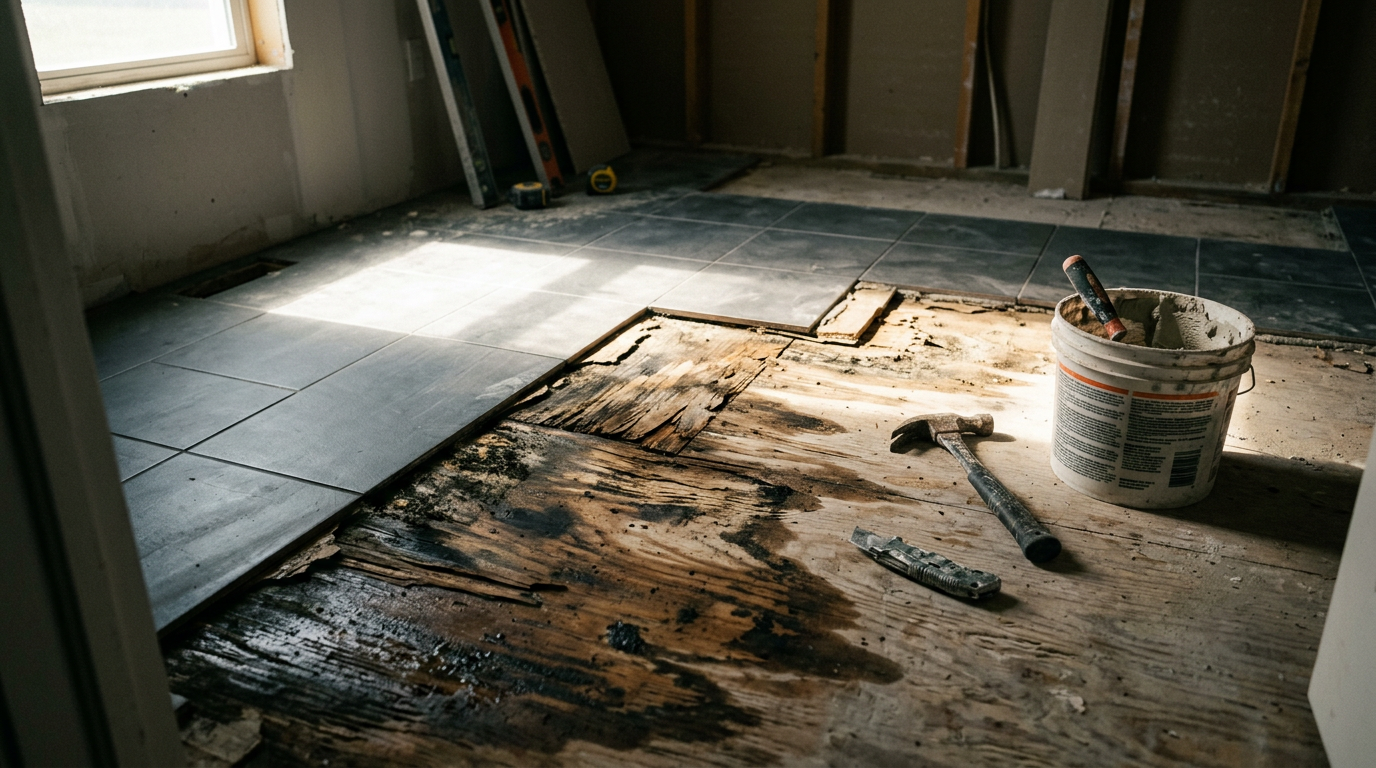
What goes wrong: Walls open up and surprises appear — rotted subfloor, mold behind the shower tile, corroded supply lines, outdated wiring that doesn’t meet current code. These aren’t rare; they happen in roughly 30–40% of bathroom remodels in homes older than 20 years.
Real cost of this mistake: Common surprise costs include mold remediation ($1,500–$5,000), subfloor replacement ($500–$2,000), galvanized pipe replacement ($1,000–$3,000), and asbestos tile abatement ($1,500–$3,500). Without a contingency fund, you’re either borrowing under pressure or stopping the project mid-demo.
How to avoid it: Set aside 10–15% of your total budget in a dedicated contingency fund before construction starts. Do not earmark it for upgrades. This money exists solely for surprises.
Mistake 3: Paying Too Much Upfront
What goes wrong: A contractor asks for 50% down — or more — before work begins. The homeowner pays, work starts slowly or not at all, and recovering the money through small claims or contractor licensing boards is a months-long process.
Real cost of this mistake: Recovery on contractor fraud or abandonment averages pennies on the dollar. Even legitimate contractors who take large deposits have little financial incentive to prioritize your project.
How to avoid it: The standard payment structure for a bathroom remodel is 10–30% at contract signing, progress payments tied to verified milestones, and 5–10% held until final walkthrough and punch list completion. Never pay in cash. Get payment schedules in writing before signing.
Design Mistakes
Mistake 4: Inadequate Ventilation
What goes wrong: Homeowners skip the exhaust fan upgrade, install an underpowered unit, or — most commonly — vent the fan into the attic instead of through the roof or exterior wall. Moisture accumulates, mold follows, and the damage often isn’t visible until it’s extensive.
Real cost of this mistake: Bathroom mold remediation typically costs $1,500–$5,000. If mold has spread to wall framing or ceiling joists, costs can reach $10,000+. The source: a $20 difference in fan quality or a $150 difference in installation routing.
How to avoid it: Size your exhaust fan for your bathroom square footage — the standard formula is 1 CFM per square foot, with a minimum of 50 CFM. For bathrooms with separate toilet compartments or large showers, run a dedicated fan. Require your contractor to show you the exterior vent termination point before drywall is closed.
Mistake 5: Poor Lighting Design
What goes wrong: The project keeps the single overhead fixture that was there before. Result: shadows across the face at the vanity mirror, a dark shower, and a room that feels smaller and less finished than its materials warrant.
Real cost of this mistake: Adding recessed lighting or a wall sconce after drywall is closed runs $400–$900 per fixture (versus $150–$300 during rough-in). The cost of waiting is doing it twice.
How to avoid it: Plan lighting in three layers: ambient (overhead), task (flanking the mirror, not above it), and accent (under vanity or in a niche). Finalize your lighting plan before rough-in electrical is complete. Color temperature matters: 2,700–3,000K replicates flattering incandescent warmth while providing sufficient brightness.
Mistake 6: Ignoring Storage in the Design Phase
What goes wrong: The shower is beautiful, the tile is perfect, and there’s nowhere to put anything. No medicine cabinet, no linen storage, no shower niche, no towel bar in a usable location. A bathroom with no functional storage becomes cluttered within weeks.
Real cost of this mistake: Adding a recessed medicine cabinet or shower niche after tile is set runs $600–$2,000. A niche requires cutting into finished tile — a job that risks cracked surrounding tiles and compromised waterproofing.
How to avoid it: Map out storage locations on your bathroom layout before finalizing tile patterns. Shower niches must be planned and waterproofed during rough construction — they cannot be an afterthought. Allow at minimum: one medicine cabinet or mirrored cabinet, one linen storage solution, and a shower niche or built-in bench with shelf.
Mistake 7: Chasing Trends Over Function
What goes wrong: A floating vanity with no drawer space looks sleek but provides zero storage. A freestanding soaking tub in a 55-square-foot bathroom that gets used twice a year. A matte black finish on every fixture that shows every water spot and requires daily wiping to look presentable.
Real cost of this mistake: Trend-driven choices that conflict with daily use patterns lead to functional regret within 2–3 years. Replacing a trendy but impractical vanity runs $1,200–$4,000 installed.
How to avoid it: Before finalizing any design element, ask: how does this work at 7am on a Tuesday? A bathroom that functions well every day is worth more than one that photographs well and frustrates in use. Design for the household’s actual habits — number of users, morning routine duration, storage needs, cleaning tolerance.
Execution Mistakes
Mistake 8: Skipping Permits
What goes wrong: The contractor suggests “going without permits” to save money and time. The homeowner agrees. Plumbing and electrical work are completed without inspection. Years later, the home goes on the market — and the buyer’s inspector or appraiser flags the unpermitted work.
Real cost of this mistake: Resolving unpermitted bathroom work at sale typically costs $2,000–$8,000 — permit fees, inspection costs, and often opening walls to verify code compliance. Some lenders will not finance homes with significant unpermitted work, killing the sale entirely.
How to avoid it: Require your contractor to pull permits before work begins. Permit fees ($500–$2,000) are a small fraction of project cost and protect you legally. Verify permit status yourself through your municipality’s online portal — do not take the contractor’s word for it.
Mistake 9: Wrong Order of Operations
What goes wrong: Tile goes in before the rough-in inspection. Drywall closes before the electrician finishes. The vanity is installed before the floor tile is set, causing alignment problems. Each sequencing error requires either rework or accepting a substandard result.
Real cost of this mistake: Rework is among the most expensive line items in a bathroom remodel. Retiling a floor because a rough-in inspection failed adds $1,500–$3,500 in labor and materials. Recutting tile around a vanity that was installed in the wrong sequence adds $300–$800 in labor.
How to avoid it: Understand the correct bathroom remodel order of operations before signing a contract. The general sequence is: demo → rough plumbing → rough electrical → inspections → cement board/backer → waterproofing → tile → fixtures → vanity → trim and paint → final inspections. Ask your contractor to walk through their sequencing plan explicitly.
Mistake 10: Inadequate Waterproofing
What goes wrong: Cement board is used as a waterproofing layer (it is not — it is water-resistant, not waterproof). The shower pan is tiled directly over felt paper. The niche is tiled without a membrane. Water infiltrates over 12–24 months of use and begins rotting the framing behind the tile.
Real cost of this mistake: Water damage remediation behind a tiled shower — including demo, mold treatment, framing repair, and re-tiling — costs $5,000–$15,000. This is the single most expensive consequence of a bathroom remodel done wrong.
How to avoid it: A proper shower waterproofing system includes a continuous membrane (RedGard, Schluter Kerdi, or equivalent liquid-applied membrane) applied over cement board and into all corners and transitions. The shower pan requires a sloped mortar bed or pre-sloped foam pan with a bonded waterproof liner. Ask your contractor specifically what waterproofing system they use and whether it is manufacturer-warranted.
Mistake 11: Not Verifying Contractor References
What goes wrong: The homeowner hires based on price or a friend-of-a-friend recommendation without speaking to recent clients. The contractor performs adequate rough work but the finish quality — tile alignment, grout consistency, caulk lines — is poor. Or worse, they disappear before punchlist completion.
Real cost of this mistake: Fixing poor tile work after the fact means demo and re-tile: $2,500–$6,000 for a standard shower. Pursuing a contractor who abandons a project involves filing with the state licensing board, small claims court, and often surety bonds — a process taking 6–18 months.
How to avoid it: Call three references from bathroom remodels completed in the last 12 months. Ask specifically: Did the project finish on time? On budget? Are you happy with the tile work and grout joints? Would you hire them again? Also verify their license status at your state contractor licensing board and confirm they carry general liability and workers’ compensation insurance.
Material Mistakes
Mistake 12: Choosing Looks Over Durability
What goes wrong: A homeowner selects a stunning natural marble floor tile because it photographs beautifully. Marble is porous, reacts to acidic cleaners, and requires annual sealing. In a high-traffic bathroom, it stains, etches, and requires professional polishing within a few years.
Real cost of this mistake: Professional marble restoration runs $5–$10 per square foot. A 50-square-foot bathroom floor costs $250–$500 to restore — a recurring expense the homeowner didn’t anticipate.
How to avoid it: For high-use surfaces, match material to use case:
| Surface | Best Choice | Avoid |
|---|---|---|
| Shower floor | Textured ceramic or porcelain (slip-resistant) | Polished marble, large-format smooth tile |
| Bathroom floor | Porcelain (PEI rating 4–5) | Unglazed natural stone, low-PEI ceramic |
| Vanity countertop | Quartz or porcelain slab | Unsealed marble, low-grade laminate |
| Shower walls | Rectified porcelain, large-format ceramic | Highly textured tile (grout maintenance nightmare) |
Mistake 13: Wrong Tile for Wet Areas
What goes wrong: Homeowners select floor tile without checking the PEI (Porcelain Enamel Institute) wear rating, or use wall tile on the shower floor where it lacks the coefficient of friction required for safety. Smooth, polished tiles on a wet shower floor are a slip hazard. Low-PEI tiles scratch and dull within a year.
Real cost of this mistake: Replacing improperly selected shower floor tile after installation means full demo and re-tile: $800–$2,500 for an average shower floor.
How to avoid it: For shower floors, select tile with a Dynamic Coefficient of Friction (DCOF) of 0.42 or higher — this is the ANSI A137.1 wet-surface standard. For bathroom floors, use PEI rating 4 or 5. Confirm these specs with your tile supplier before purchasing, not after installation.
Mistake 14: Cheap Plumbing Fixtures
What goes wrong: A budget showerhead or faucet looks fine in the box but fails within 2–3 years. Drip leaks at the valve, mineral buildup clogs the aerator, the finish tarnishes or flakes. The homeowner ends up paying for fixture replacement plus a plumber’s service call.
Real cost of this mistake: A plumber’s service call to replace a failed faucet runs $150–$300 labor, plus the cost of the replacement fixture. Done twice in 5 years, that’s $400–$700 more than buying a quality fixture upfront.
How to avoid it: For faucets and showerheads, buy from brands with established warranty programs: Moen (lifetime limited warranty on most residential fixtures), Delta, Kohler, or Grohe. Expect to spend $80–$200 for a quality faucet versus $25–$50 for a builder-grade unit. The difference in longevity is significant and the warranty matters.
Mistake 15: Skimping on Grout and Caulk
What goes wrong: Standard sanded grout is used everywhere, including wet areas and inside corners. No caulk is applied at transitions (floor-to-wall, wall-to-tub). Standard grout cracks at movement joints within 1–2 years and is not waterproof. Moisture enters, and the cycle of damage begins.
Real cost of this mistake: Regrout of a full shower runs $500–$1,500. Water infiltration from failed grout transitions — especially at the tub-to-tile seam — leads to the same subfloor and framing damage described in Mistake 10.
How to avoid it: Use epoxy grout or polymer-enhanced grout in wet areas for superior stain and crack resistance. At all movement joints and transitions (floor-to-wall, wall-to-tub/shower, inside corners), use 100% silicone caulk, not grout. Silicone flexes with building movement; grout cracks. This is a standard industry practice, not an upgrade.
Pre-Remodel Checklist
- Get at least 3 written quotes from licensed, insured contractors
- Verify contractor license status at your state licensing board
- Call 3 references from bathrooms completed in the last 12 months
- Confirm payment schedule is milestone-based (no more than 30% upfront)
- Confirm contractor will pull all required permits
- Set aside 10–15% contingency fund before construction starts
- Finalize lighting plan before rough-in electrical begins
- Map out all storage locations (niche, medicine cabinet, linen closet)
- Verify tile PEI rating and DCOF for wet-area applications
- Confirm waterproofing system (membrane type and application method)
- Review the complete sequencing plan with your contractor
- Check that exhaust fan is sized correctly (CFM) and vented to exterior
- Verify all fixture warranties before purchasing
- Confirm silicone caulk (not grout) at all movement joints and transitions
- Budget for full material cost including waste factor (add 10–15% to tile quantities)
The Bottom Line
Most expensive bathroom remodel mistakes are not dramatic failures — they are quiet compounders. Poor waterproofing does not announce itself for two years. Inadequate ventilation breeds mold behind finished walls. Unpermitted work sits dormant until a real estate transaction makes it a crisis. The cost of these mistakes isn’t just financial: it’s time, stress, and the disruption of tearing out work that should have been done right the first time.
The pattern across all 15 mistakes is the same: decisions made to save money in the short term that create significantly larger expenses later. A licensed contractor who pulls permits, uses proper waterproofing materials, and follows the correct sequencing will cost more upfront than one who doesn’t. That premium is almost always worth paying.
For a full cost breakdown before you start planning, see how much a bathroom remodel actually costs in 2026.
Deep Dive: More on Bathroom Remodel
10 Bathroom Tile Trends for 2026: What's In and What's Out
The top bathroom tile trends for 2026 — from zellige to tile drenching. See what's trending, what it costs, and which styles have staying power.
How to Choose a Bathroom Vanity: Sizes, Styles, and What to Look For
A complete guide to choosing the right bathroom vanity. Covers sizes, materials, countertops, sinks, and costs for every budget.
How Long Does a Bathroom Remodel Take? A Timeline Guide
A bathroom remodel takes 2-8 weeks depending on scope. See phase-by-phase timelines, common delays, and how to keep your project on track.
Best Tile for Bathroom Floors: A Complete Comparison Guide
Choosing bathroom floor tile? Compare porcelain, ceramic, natural stone, and vinyl by cost, durability, water resistance, and maintenance.